
The same part can differ several-fold in cost and precision depending on whether it is sintered, machined, die cast or stamped. Sorting out where each process fits saves more time than repeat quoting.
The most common mistake in choosing a forming process is comparing unit prices side by side. The four processes have completely different cost structures. In machining, nearly all the cost sits in machine time, so the unit price barely changes between one part and a thousand. In powder metallurgy, die casting and stamping, tooling dominates as a fixed cost: once the die is cut, unit cost falls quickly with volume. A unit price quoted without a batch size therefore says very little.
Powder metallurgy compacts metal powder in a die and then sinters it in a controlled atmosphere until the particles bond into a solid. Because a single compaction can produce gear teeth, shoulders, non-round bores and keyways, very little machining follows. That makes it a good fit for small and medium parts with moderately complex geometry, tighter tolerances and volumes above a few thousand pieces — the range where most gears, bushings and structural parts live.
Machining wins on precision and flexibility. It holds tolerances in the micron range, and a drawing change costs only a program change with no tooling investment. The trade-off is low material utilisation and a high share of machine time, so it suits very small batches (tens to hundreds), geometries that cannot be moulded, or tolerances no other process reaches. Many projects prove a design by machining samples and move to sintering for volume.
Die casting is liquid forming: molten metal is forced into a die cavity at high speed. It suits thin-walled, larger and complex non-ferrous parts with excellent surface finish. Strength and density are generally below sintered steel, and internal porosity is common, so it is rarely used for gears under load.
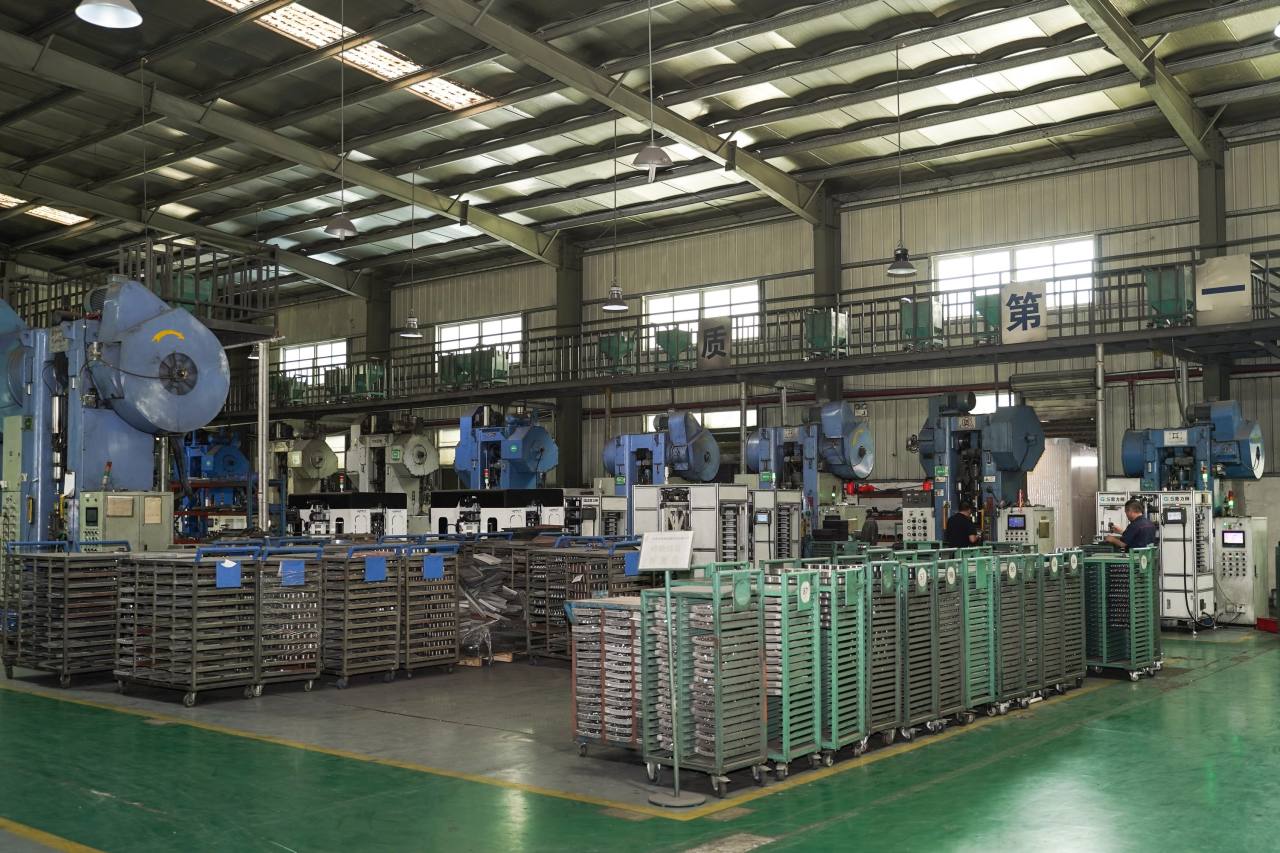
Stamping forms flat sheet. It is extremely fast and cheap per piece, but wall thickness must be uniform and true three-dimensional geometry is out of reach. For flat plates and shims it is usually the cheapest answer.
A practical order of judgement: start with volume — above a few thousand pieces, favour a tooled process; then geometry — three-dimensional, toothed or shouldered parts point to sintering; then tolerance — only if a critical dimension is tighter than ±0.01 mm and cannot be recovered by a finishing step does machining become necessary.
One point that is often missed: processes combine. Sinter the main shape, then size or grind the critical mating surfaces. That keeps the low-cost forming route while holding the tolerances that matter — the usual approach for gear bores and bearing seats.
If you are unsure which route suits your part, send us the drawing. We will give you a feasibility view: whether it can be made, which process we would recommend, and roughly at what volume it becomes worthwhile.