
Why Unit Cost Falls with Volume: How to Think About Tooling Cost
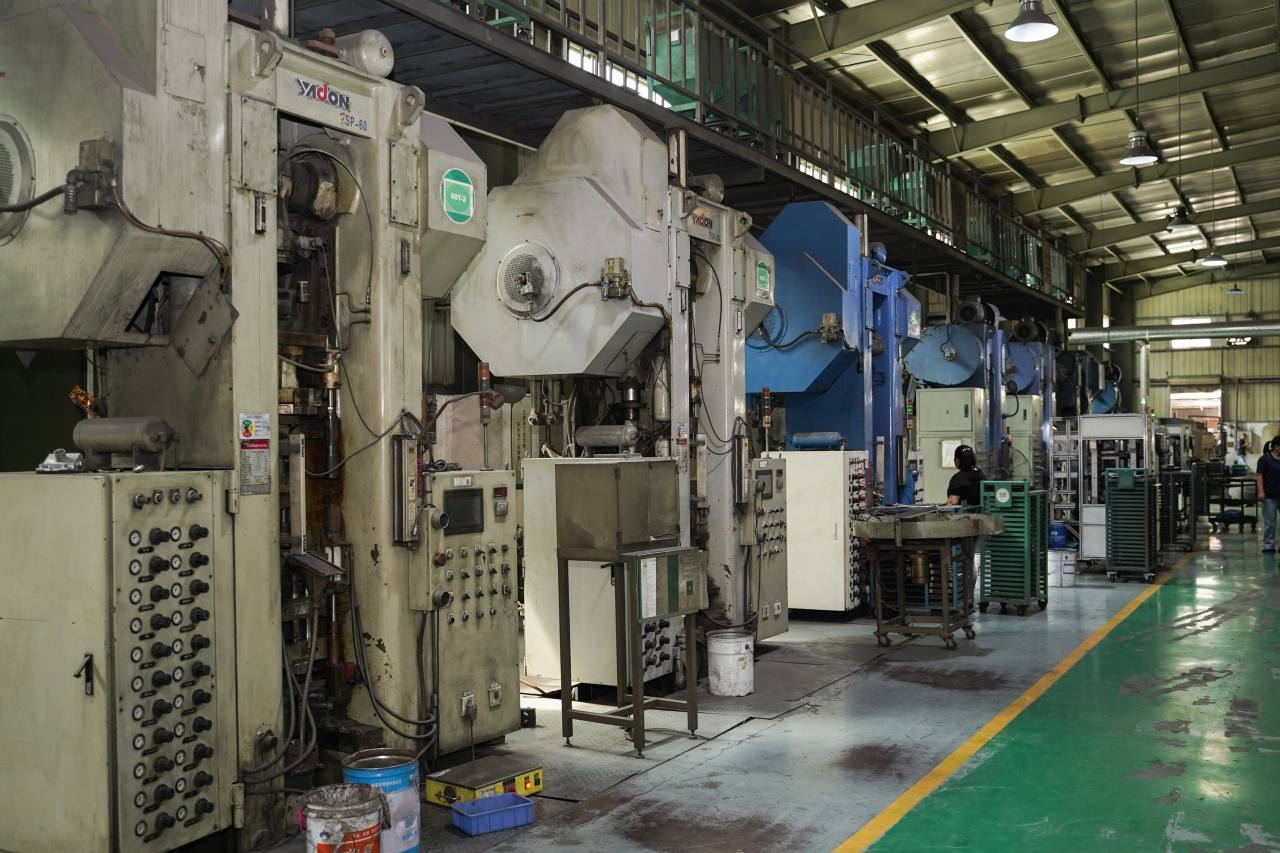
In a sintered part, tooling is a fixed cost while material and machine time are variable. Knowing the shape of that curve tells you at which volume a die is worth cutting.
A common question: why is the unit price for 1,000 pieces so different from the price for 100,000 of the same drawing? The answer is in the cost structure.
A sintered part has two cost blocks. One is fixed, mainly tooling. The other is variable: material, compaction time, sintering energy and any secondary operations. Fixed cost does not change with quantity; variable cost accumulates per piece.
Spread the fixed cost across the pieces and you get the familiar falling curve. At low volume, tooling dominates and pushes the unit price up. As volume rises, tooling is diluted and the unit price approaches the floor set by variable cost.
Where the curve flattens depends on the ratio of tooling cost to variable cost per piece. Take a die at 20,000 and variable cost of 1 per piece: at 1,000 pieces the total is about 21 each; at 10,000 it falls to 3; at 100,000 it is 1.2. From 1,000 to 10,000 the price drops around 85%; beyond that the fall flattens. Whether a project makes sense is really a question of how far the tooling can be amortised.
This also explains a common observation: a high unit price on a small custom batch is usually not a supplier margin, but the honest arithmetic of amortising a die over few pieces.
So at what volume is cutting a die worthwhile? As a rough rule, if the expected total production brings tooling below 20% of unit cost, a die usually pays for itself. Below that, it can make sense to start with machining or a simplified die and commit to production tooling once demand is confirmed.
There are several ways to reduce tooling-related cost: shared tooling (one die body serving several parts via interchangeable inserts), simplified geometry (removing features that make the die complex for no functional gain), and keeping tolerances inside what the die holds so no extra operations are needed.
It is worth noting that how tooling is charged and amortised is negotiable. Some projects pay for the die up front in exchange for a lower unit price; others amortise it into the unit price. Each suits a different cash-flow position and project horizon.
If you have a firm annual volume and project duration, give us those two numbers and we can produce a more realistic cost curve to show at which stage committing to tooling becomes worthwhile.