
Two public reports and one industry show this November point to the same trend: robot joint reduction mechanisms are becoming an important growth application for powder metallurgy gears. A summary of the publicly reported facts.
Through November, two public reports and one industry trade show have pointed in the same direction: powder metallurgy gears are finding a new growth market in robotics, especially in the joint reduction mechanisms of humanoid robots and intelligent equipment.
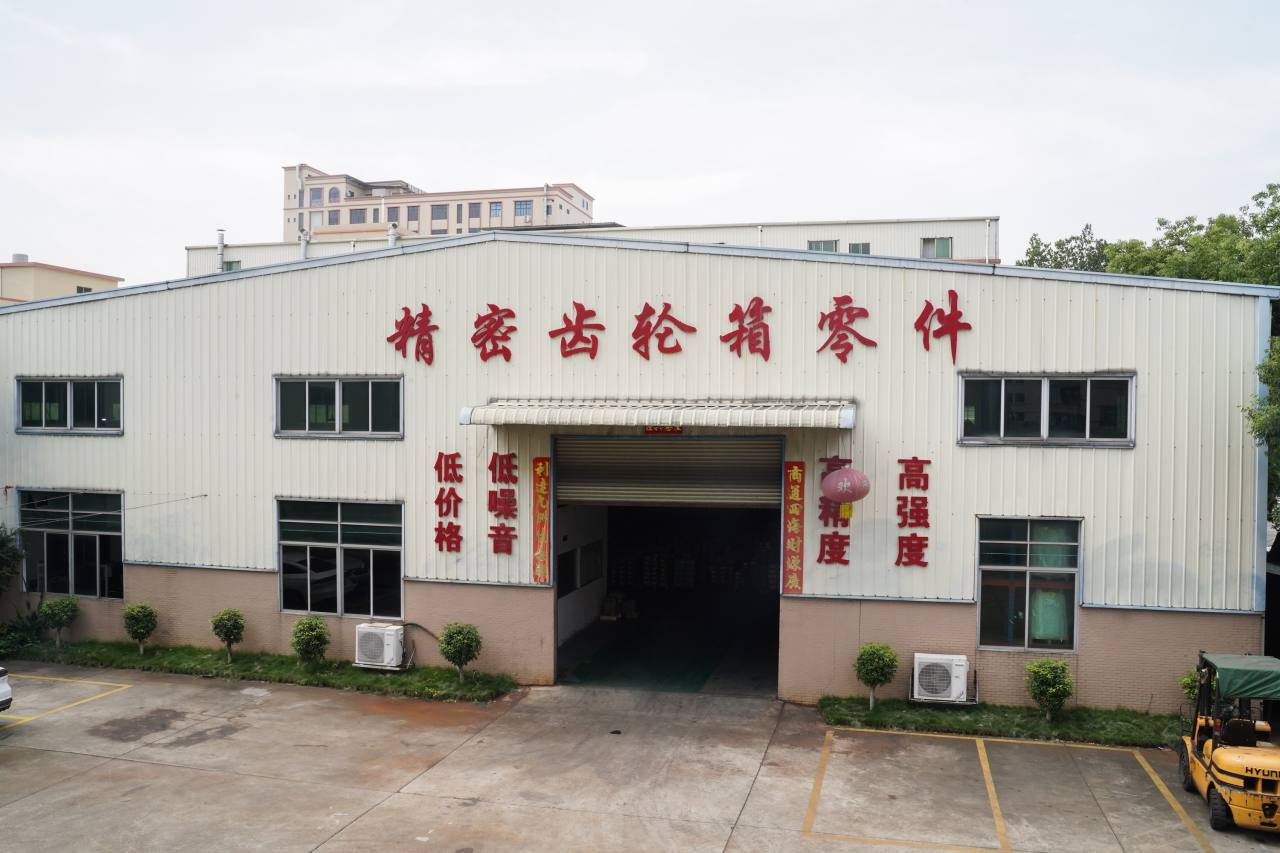
The first report came from Shenzhen News (sznews.com) on November 18: at a talent-sharing event held in Yanluo Subdistrict, Bao'an District, Yi Xingju, manager of the powder metallurgy division of Zhaowei Electromechanical, described how the company achieved high-precision, high-strength, high-density and low-cost PM gear manufacturing through breakthroughs in material formulation, die refinement and automated part handling, and has entered the robot joint segment. The report also noted his remark that the industry currently "has the technology but lacks orders" — supply-side capability is ahead, while the bottleneck lies in demand development.
The second came from a Tencent News analysis of Ningbo Jingda's Q3 results on November 2: the company, whose main business is heat-exchange equipment, has acquired a 51% stake in Hiechi Technology through a capital increase, entering the powder metallurgy industry chain across four process routes — PM, MIM, SMC and additive manufacturing — targeting downstream segments such as robot gears and optical-communication components. The industry analysis cited in the report notes that the humanoid robot industry is bringing incremental demand to powder metallurgy: core components such as reducer gears, harmonic generators and bearing housings place extreme demands on material density, dimensional accuracy and fatigue strength, and PM processes can form complex structural parts in one step, reducing machining operations and material waste.
The trade-show signal is equally clear: from November 3 to 6, the 30th Asian International Power Transmission and Control Technology Exhibition (PTC ASIA 2026) was held at the Shanghai New International Expo Centre, with nearly 1,300 exhibitors from more than 20 countries and regions, where gear transmission was one of the core sections.
Taken together, the trend is clear: the requirements of robot joints — compact size, high torque density and batch-to-batch consistency — match closely with the strengths of powder metallurgy: near-net forming and minimal cutting waste. Combined with the recent release of the group standard for rail-transit brake discs, the application boundaries of sintered parts keep expanding from traditional automotive components toward higher-value segments.
For buyers evaluating suppliers of sintered gears for robots or intelligent equipment, beyond the usual dimensional accuracy and material certificates, three points deserve extra attention: process data on batch consistency (joint module assembly is sensitive to part interchangeability), inspection capability for tooth-profile accuracy (such as dedicated gear-profile and helix testing), and capacity flexibility when ramping from small pilot batches to volume production.
(This article is compiled from public reports. Sources: Shenzhen News, November 18, 2026; Tencent News, November 2, 2026; public information about PTC ASIA 2026. The content is reproduced for industry-information purposes only, does not represent the position of this website, and does not imply any cooperation or supply relationship.)